

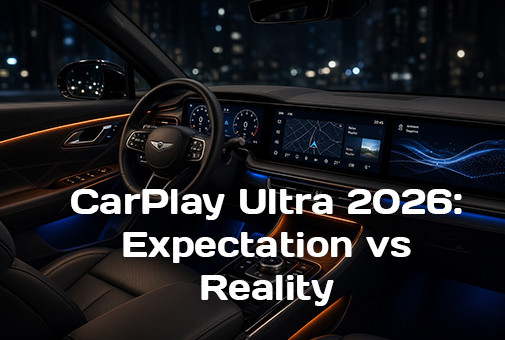
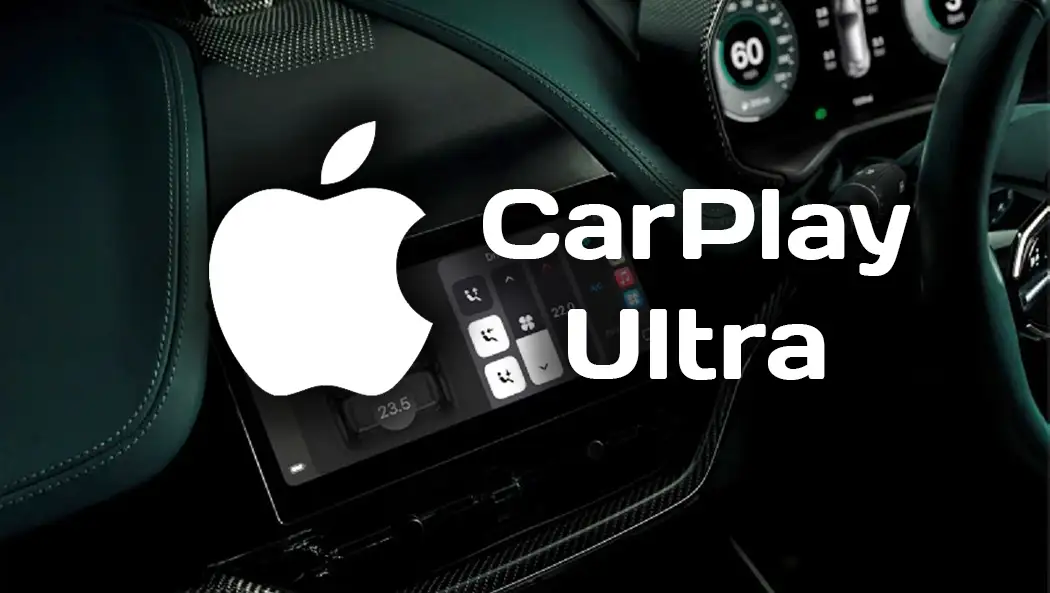
Apple CarPlay Ultra was supposed to completely redefine the modern dashboard. When Apple first teased the next-generation platform taking over every screen in the car - from the central infotainment display to the digital instrument cluster and climate controls - drivers expected a sweeping revolution.
Yet, here we are, and the reality is stark: CarPlay Ultra remains virtually non-existent outside of ultra-luxury or exotic vehicles like Aston Martin and Porsche. Mass-market automakers are quietly pumping the brakes, delaying implementations, or restricting the system to basic features.
Why is the most anticipated automotive tech of the decade stalled? And more importantly, if you drive a standard vehicle today, what can you actually do to upgrade your cockpit? Let's break down the technical, political, and hardware roadblocks holding back the industry.
The Core Problem: Automakers Will Not Surrender the CAN-Bus
To understand why CarPlay Ultra is stuck in limbo, you have to look past the marketing and examine electronic architecture. Traditional CarPlay acts as a projection app running on top of the car's native infotainment operating system. CarPlay Ultra, however, demands direct, low-level control over the vehicle's entire network.
To make CarPlay Ultra work seamlessly across multiple screens, manufacturers must allow Apple's software to interface directly with the vehicle's internal data bus (CAN-bus, Ethernet, and specialized microcontrollers). This creates massive friction for traditional automotive brands:
- Data Ownership and Telemetry: Automakers have spent billions building proprietary connected-car ecosystems, subscription models, and data-harvesting pipelines. Handing the entire UI layer over to Apple means losing direct engagement with the driver.
- Safety and Liability Regulations: Instrument clusters and warning chimes are tied to strict international safety certifications (ISO 26262). If a software glitch on a smartphone-driven cluster delays a check-engine warning or an ABS fault notification, who is legally liable? Apple or the car manufacturer? Automakers are not willing to take that risk.
- Hardware Integration Costs: Most mainstream cars on the road today feature fragmented, multi-ECU architectures that simply lack the processing power and unified display pipelines required to render multi-screen Apple graphics natively without stuttering.
As a result, major brands have either delayed the rollout indefinitely or pulled back to conservative, walled-garden software strategies of their own.
The Myth of the Software Update: Why You Can't Retrofit It
A common misconception among car owners is that CarPlay Ultra is just an over-the-air (OTA) software update away. If your car has a large touchscreen and wireless CarPlay right now, surely a software patch can unlock the full multi-screen experience, right?
Technically and architecturally, the answer is no:
- Physical Screen Topography: CarPlay Ultra requires specialized hardware display drivers capable of synchronizing multiple high-resolution panels simultaneously. Standard factory head units are single-output computers; they cannot split and project isolated UI layers to a separate digital instrument cluster unless the car was wired for it at the factory floor.
- The Processing Bottleneck: Running native animations, real-time vehicle telemetry widgets, and media across three different screens demands dedicated graphical processing units (GPUs) and memory bandwidth that standard OEM head units completely lack.
- Closed Ecosystem Locks: Factory head units are locked down by strict cryptographic keys. Without factory firmware rewrite permissions - which manufacturers will never grant for liability reasons - third-party modifications of the digital dash are a dead end.
Comparing the Options: CarPlay Ultra vs. Standard CarPlay vs. Android Head Unit
To understand which solution makes sense for your vehicle today, let's compare how these technologies perform across key technical parameters:
| Feature / Metric | Apple CarPlay Ultra | Standard Wireless CarPlay | Modern Premium Android Head Unit |
|---|---|---|---|
| Availability in 2026 | Extremely limited (Exotics only) | Wide (Standard on most cars) | Universal retrofit for most models |
| Multi-Screen Support | Native (Cluster + Infotainment) | Single screen only | Split-screen + Dual-zone output |
| CAN-Bus Deep Integration | Requires factory OS handover | Basic (Steering wheel buttons) | Full integration via OEM decoders |
| App Ecosystem Freedom | Restricted to Apple App Store | Restricted to CarPlay certified apps | Open Android OS (Any APK / Google Play) |
| Retrofit Capability | Impossible on older cars | Requires adapter or screen swap | Complete hardware upgrade available |
| Hardware Dependence | Car ECU + iPhone GPU | Smartphone processor | Dedicated Snapdragon onboard CPU |
What Is Actually Available in 2026? Realistic Ways to Upgrade Your Dashboard
If factory systems are locked down and next-gen standards are tied up in corporate boardrooms, how do you get a cutting-edge interface in your car today?
For drivers who want modern processing speeds, split-screen multitasking, customized applications, and fluid smartphone integration, the industry has shifted toward high-performance aftermarket solutions.
1. Dedicated Android Head Units with Advanced Hardware Integration
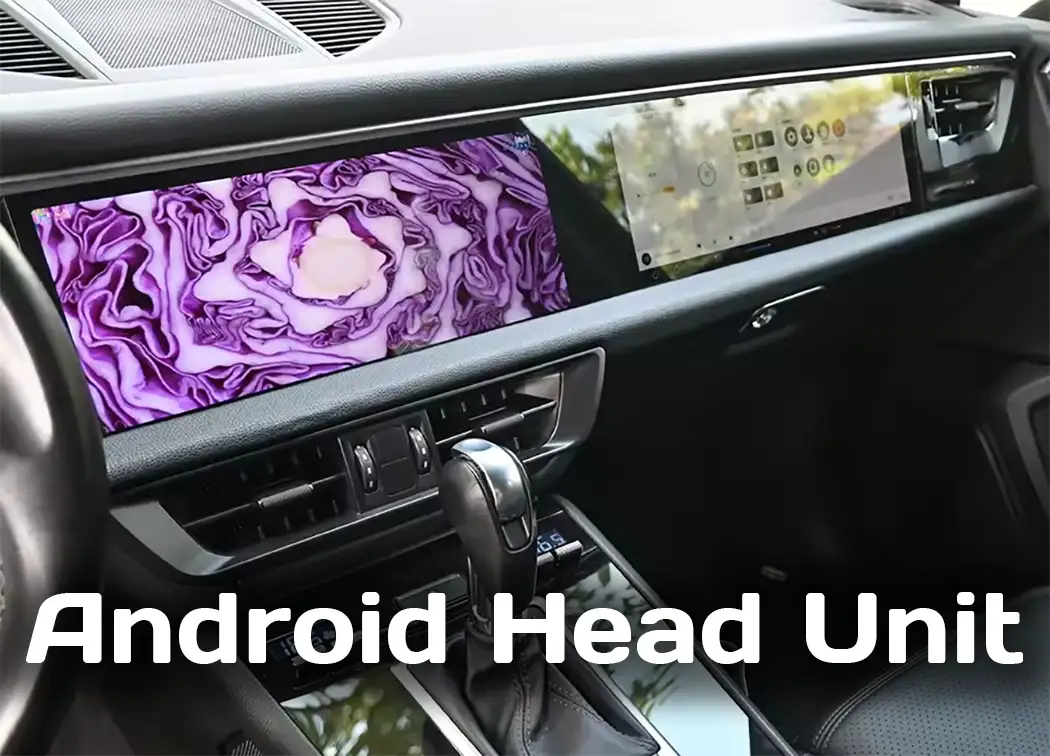
Modern premium Android head units bypass the limitations of factory infotainment systems entirely. Instead of relying on restricted OEM software, a dedicated system replaces the physical screen and internal processing unit with industrial-grade hardware.
- Powerful Multi-Core Processors: Modern head units leverage high-performance chipsets (such as advanced Qualcomm Snapdragon processors) that effortlessly handle split-screen apps, navigation, and high-definition video playback without lag.
- Preserving Factory Integrity: Modern installation kits use specialized CAN-bus decoders that retain steering wheel controls, factory backup cameras, climate control overlays, and optical audio amplifiers without compromising vehicle diagnostics.
- Flexible Ecosystems: Unlike restrictive factory software, an open Android platform lets you install your preferred navigation, streaming, and diagnostic apps directly on the dashboard.
2. Standalone Wireless CarPlay and Android Auto Modules
If your vehicle's factory screen layout is acceptable, but you want faster connection speeds and modern wireless integration, high-stability hardware-bridge adapters bridge the gap. These plug-and-play modules eliminate the traditional lag and connection drops associated with early-generation wireless dongles, offering immediate access to standard CarPlay and Android Auto.
Frequently Asked Questions (FAQ)
Can I upgrade my current car to support Apple CarPlay Ultra via a software update?
No. CarPlay Ultra requires multi-display video output hardware, direct low-level CAN-bus access, and certified instrument cluster controllers that standard factory head units physically do not possess.
Why are major automakers delaying the adoption of CarPlay Ultra?
Automakers are hesitating due to legal liabilities regarding safety-critical digital instrument clusters, loss of proprietary data telemetry, and the desire to sell their own software subscriptions.
Will installing a modern Android head unit disable my factory car functions?
No, provided you use a vehicle-specific kit with a dedicated CAN-bus decoder. Quality systems fully preserve factory steering wheel controls, original backup cameras, climate readings, and native amplifier control.
What hardware specs should I look for in an Android head unit in 2026?
Look for an 8-core Qualcomm Snapdragon processor, at least 6GB or 8GB of RAM, an optical audio output (DSP), and a QLED or OLED high-resolution display for optimal performance and longevity.
Final Thoughts
CarPlay Ultra is a brilliant vision of the future, but it is bogged down by corporate protectionism, regulatory hurdles, and hardware limitations that keep it out of reach for 99% of drivers on the road today.
Waiting for automakers to democratize multi-screen software is a losing game. If you want a fast, responsive, and modern tech experience in your vehicle right now, the practical path forward lies in robust hardware upgrades and tailored Android head units designed to bypass factory bottlenecks entirely.

 EN
EN DE
DE
 ES
ES
 FR
FR
 IT
IT
 NL
NL
 PL
PL
 PT
PT
 RU
RU