




Les principales erreurs à éviter lors de l'achat d'un autoradio Android : Le guide d'achat complet (2026)
Découvrez comment éviter les erreurs les plus courantes lors du choix d'un autoradio Android et trouvez le modèle parfait pour votre véhicule. Ce guide complet 2026 vous aide à vérifier la compatibilité, le matériel et les fonctionnalités essentielles avant votre achat.
Principales erreurs lors du choix et de l'achat d'un autoradio Android
En 15 ans de présence sur le marché des systèmes multimédias, SMARTY Trend a rencontré des centaines de situations où l'insatisfaction du client ne provenait pas de l'autoradio lui-même, mais d'une des huit questions ci-dessous non résolues au moment du choix. Retrouvez tous les détails dans nos guides sur la compatibilité DIN/CAN-Bus, la mémoire et les processeurs.
1. Achat sans vérification préalable de la compatibilité
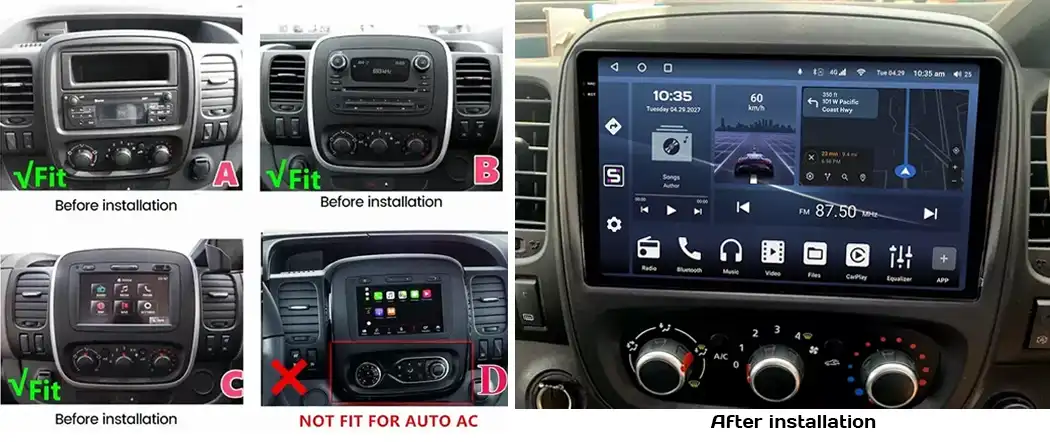
L'unité centrale doit correspondre exactement à l'emplacement de montage (1-DIN, 2-DIN, écran large d'origine), à la version du réseau CAN-Bus correspondant à l'année et au marché de votre véhicule, tout en conservant les fonctions d'origine : climatisation, radars de recul, régulateur de vitesse, amplificateur d'origine (Bose, JBL, Harman Kardon). Même au sein d'une même génération, le réseau CAN-Bus et les connecteurs peuvent varier ; vérifiez donc l'année exacte et la version régionale via le numéro VIN au lieu de vous fier uniquement au nom du modèle. Retrouvez la procédure détaillée dans notre guide de compatibilité.
2. « Plus c'est moins cher, plus c'est avantageux »
Une différence de prix du simple au double pour des autoradios visuellement identiques masque souvent : une mémoire tronquée par rapport au volume annoncé (décelable uniquement par un test d'écriture), un processeur obsolète rebaptisé sous un nouveau nom de série, l'absence de service après-vente et l'absence de décodeurs CAN-Bus adaptés. L'économie initiale se traduit souvent par un nouvel achat au bout de six mois.
3. Mauvais calcul de la RAM et de la ROM
Repères : 4+64 Go constitue la base pour CarPlay/Android Auto sans utilisation intensive d'applications intégrées ; 6+128 Go ou 8+128 Go est optimal pour faire fonctionner simultanément la navigation, la musique et une caméra DVR ; 8+256 Go et plus s'adresse à un usage intensif d'Android comme système autonome. La méthodologie complète est disponible dans le guide RAM/ROM.
4. Négliger le processeur
La mention « Octa-core » ne renseigne en rien sur la vitesse réelle : une puce datant de trois ans et une de génération actuelle présentent des écarts majeurs en matière de réactivité d'interface et d'efficacité énergétique. Cela influe directement sur la rapidité de la navigation, la stabilité lors du fonctionnement simultané de la caméra et du Bluetooth, ainsi que sur la durée de vie de l'appareil. Consultez le comparatif des plateformes dans le guide des processeurs.
5. Type de CarPlay/Android Auto non précisé
« Compatible CarPlay » et « compatible CarPlay sans fil » sont deux choses différentes. Assurez-vous de savoir si la connexion simultanée de deux téléphones est possible, si le lancement automatique au démarrage est géré et si les nouveaux protocoles comme CarPlay Ultra sont pris en charge. Comparatif disponible dans notre guide CarPlay vs Android Auto.
6. Conservation des fonctions d'origine non confirmée
Une réclamation fréquente après installation concerne la perte des commandes au volant ou des capteurs de pluie/luminosité. La cause est l'absence de décodeur CAN-Bus adapté à la finition exacte ou l'utilisation d'un adaptateur universel au lieu d'un modèle spécifique. Exigez du vendeur une confirmation formelle pour votre véhicule plutôt qu'une affirmation vague comme « tout fonctionne ».
7. Choix de l'écran basé uniquement sur la diagonale
La technologie de la dalle importe plus que la taille : l'IPS garantit un rendu des couleurs stable et de grands angles de vision ; le QLED offre une luminosité et un contraste supérieurs, indispensables en plein soleil. Une haute résolution sur papier ne garantit pas la lisibilité des petits textes de cartographie : vérifiez la luminosité maximale exprimée en nits, en particulier sous un climat ensoleillé.
8. Installation effectuée par un monteur non qualifié
Même le meilleur équipement peut être détérioré par une mauvaise installation : dégradation du faisceau par manque de connecteurs adaptés, mauvais paramétrage du CAN-Bus générant des erreurs au tableau de bord, ou risques lors du contrôle technique en cas d'installation d'un combiné d'instruments numérique (voir l'article sur le contrôle technique). Choisissez un technicien spécialisé dans l'intégration CAN-Bus et pas seulement dans le montage d'enceintes.
Erreur → Conséquence → Solution
| Erreur | Conséquence | Comment l'éviter |
|---|---|---|
| Compatibilité non vérifiée | Ne s'insère pas dans la console, conflit CAN-Bus | Vérifier le VIN et la génération avant commande |
| Recherche du prix le plus bas | Mémoire tronquée, processeur faible, aucun support | Vérifier les tests réels et non la publicité |
| RAM/ROM sous-estimées | Lenteurs et ralentissements après quelques mois | Dimensionner selon l'usage, pas au minimum |
| Processeur ignoré | Réactivité lente, obsolescence rapide | Vérifier la génération de la puce |
| Type de CarPlay non précisé | Absence de démarrage auto et du mode sans fil | Demander explicitement la mention « sans fil » |
| Fonctions d'origine incertaines | Perte des commandes au volant et de la climatisation | Exiger une confirmation écrite pour votre modèle |
| Écran choisi uniquement sur la taille | Mauvaise lisibilité en plein soleil | Vérifier le type de dalle et la luminosité en nits |
| Installation par un débutant | Erreurs CAN-Bus, dégradation du câblage | Faire appel à un spécialiste des autoradios Android |
Foire aux questions (FAQ)
Peut-on installer le même autoradio sur différentes années d'un même modèle ? Pas systématiquement : la gestion CAN-Bus et les connecteurs peuvent évoluer en cours de génération. Vérifiez l'année exacte et le marché d'origine.
Quelle capacité de mémoire est nécessaire pour la navigation et CarPlay ? 4+64 Go représente le minimum ; 6+128 Go ou 8+128 Go offre une marge confortable pour l'usage d'une caméra DVR et d'applications embarquées.
Le CarPlay sans fil est-il indispensable ? Il n'est pas obligatoire, mais apporte un confort supérieur : aucun câble à brancher et appairage automatique à la mise du contact.
L'installation a-t-elle un impact sur le contrôle technique ? Cela dépend du mode de montage et des réglementations locales : veillez à ne pas masquer les témoins lumineux ou avertissements d'origine (détails dans notre article dédié).
Comment vérifier la mémoire réelle auprès du vendeur ? Demandez des captures d'écran de tests de diagnostic système au lieu de vous baser uniquement sur le descriptif commercial.
Contenu rédigé par l'équipe technique de SMARTY Trend - spécialiste des autoradios Android depuis 2010, avec plus de 48 marques automobiles prises en charge.
Un autoradio Android est-il compatible avec votre voiture ? Guide...
Comment choisir la mémoire RAM et ROM pour un autoradio Android :...
Apple CarPlay Ultra et autoradios Android : pourquoi l'installation...

Guide des processeurs pour autoradios Android 2026 : Comparatif...
L'autoradio Android et le compteur digital affectent-ils le...
 FR
FR DE
DE
 EN
EN
 ES
ES
 IT
IT
 NL
NL
 PL
PL
 PT
PT
 RU
RU