



Zero-Loss Upgrade: How to Install an Android Head Unit and Retain 100% of Factory Functions
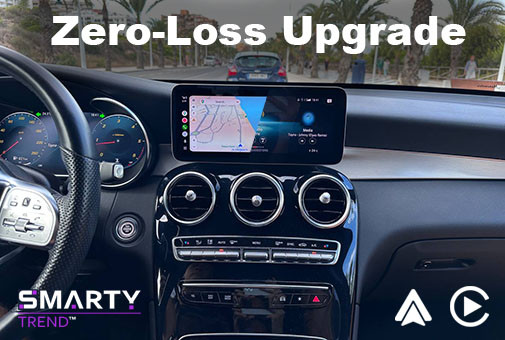
Discover how dual-system architecture lets you install a modern Android head unit while preserving 100% of factory functions, original vehicle menus, and premium OEM sound systems.
Dual-System Architecture in Modern Android Head Units: How to Keep Your Original Car Menu While Upgrading
Author: Max Vahn - Lead Technical Engineer at SMARTY Trend
With over 15 years of experience in automotive electronics and CAN-bus integration, our engineering team breaks down how you can modernize your luxury vehicle without losing its original identity.
Key Takeaways for 2026 (TL;DR)
- Zero Feature Loss: Dual-system architecture lets you keep 100% of factory menus, diagnostic data, and vehicle settings.
- Instant Switching: Toggle between your OEM system (like BMW iDrive or Audi MMI) and Android in under a second using original console buttons.
- Hardware Integration: Utilizes high-speed CAN-bus decoders and LVDS passthrough for lag-free video and error-free dashboard operation.
- Top Specifications: Flagship 2026 units feature 8-core UIS7870CS or Snapdragon processors, up to 12GB RAM, and 2K QLED screens.
The Core Concept of Dual-System Integration
The biggest fear when upgrading a car radio is losing essential factory features like oil level checks, air suspension controls, or premium audio quality. The dual-system architecture solves this completely. You never actually delete or disable your car's original computer interface.
Instead, the new Android head unit acts as an advanced secondary hardware layer. It intercepts the factory display signal via an LVDS cable. This allows you to instantly toggle between the native manufacturer menu and a high-performance Android operating system with a single button press.
For a guaranteed seamless experience, professional platforms like smarty-trend.com offer exclusively tailored dual-system solutions rather than generic universal radios.
Technical Principles: How It Actually Works
Modern vehicle electronics rely heavily on digital data networks like CAN-bus, MOST (fiber optics), and Ethernet. Upgrading a head unit used to mean sacrificing these connections.
Dual-system architecture overcomes this through hardware-level separation. The new Android motherboard runs navigation apps, streaming media, and wireless CarPlay. Meanwhile, the original factory radio motherboard remains active in the background to process all vehicle-specific digital data.
Video and Audio Routing Explained
- LVDS Passthrough: The original display signal from the factory unit is routed into the Android hardware decoder. This ensures zero signal lag and perfectly scaled resolution.
- Audio Integration: Sound is routed either through the factory AUX-IN port, a dedicated USB audio adapter, or direct CAN-bus digital optical streaming. This preserves the quality of OEM amplifiers like Harman Kardon or Burmester.
- Switching Mechanism: Users toggle between systems by holding physical console buttons (such as the iDrive knob) or simply tapping an on-screen icon.
Brand-Specific Dual-System Compatibility
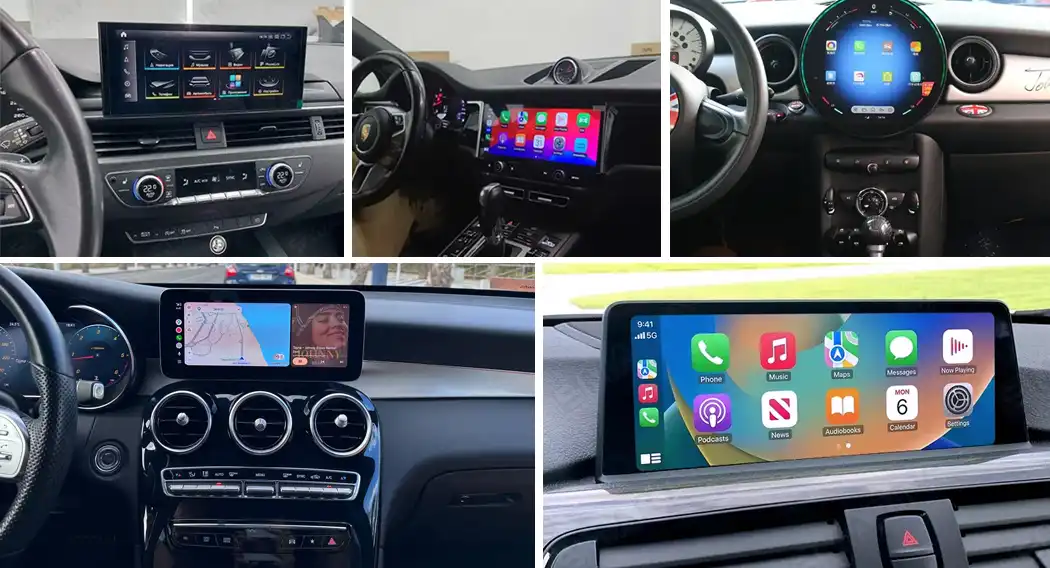
Different manufacturers use proprietary infotainment protocols. Professional plug-and-play Android systems are tailored specifically to match these architectures.
| Car Brand | Factory Infotainment | Supported Years | Switching Method | Retained OEM Functions |
|---|---|---|---|---|
| BMW | iDrive (CIC, NBT, EVO, MGU) | 2006 - 2024 | Hold "Menu" on iDrive knob | Full iDrive controller, vehicle settings, service history |
| Mercedes-Benz | COMAND / MBUX (NTG 4.0 - 7.0) | 2008 - 2024 | On-screen icon or steering wheel | NTG menu, dynamic select, original 360-degree cameras |
| Audi | MMI (3G, 4G, MIB1 - MIB3) | 2009 - 2024 | Hold "Nav" or "Media" button | MMI car settings, air suspension, BOSE audio |
| Porsche | PCM (PCM 3.1 - 5.0) | 2011 - 2024 | On-screen toggle or PCM keys | Sport Chrono data, exhaust valves, PASM settings |
| Range Rover | Touch Pro / Pivi Pro | 2012 - 2024 | Touchscreen toggle | Terrain Response, 4x4 info, Meridian audio |
| Mini Cooper | Visual Boost (NBT / EVO based) | 2014 - 2024 | Hold controller / touch icon | Mini Driving Modes, ambient lighting, vehicle status |
Engineering Challenges: Why Cheap Universal Adapters Fail
Many car owners make the mistake of buying cheap, unbranded Android screens from generic marketplaces. These units lack custom CAN-bus protocol mapping, which leads to severe technical failures.
- CAN-Bus Mismatch: Generic units flood the vehicle data network with incorrect packet IDs. This causes dashboard error codes and parasitic battery drain exceeding 50mA.
- Audio Latency: Low-quality decoders cause severe audio delay or ground-loop humming in premium factory amplifiers.
- Resolution Glitches: Unbranded hardware fails to scale properly with high-resolution OEM LVDS outputs (like Mercedes 3840x720 ultra-wide displays), resulting in stretched or flickering images.
At SMARTY Trend, we resolve these issues by utilizing vehicle-specific wiring harnesses, strictly matched CAN-bus algorithms, and high-speed 8-core processors pre-configured for your exact VIN.
Frequently Asked Questions (FAQ)
Can I switch back to the original car menu at any time while driving?
Yes. Switching between the Android interface and the original factory menu takes less than one second. You can do this at any speed via a touchscreen icon or by pressing a designated physical button on your center console.
Will installing an Android head unit lead to car warranty voidance or block diagnostics?
No. Because the original factory infotainment system remains fully functional via hardware passthrough, dealership diagnostic scanners (such as ISTA for BMW or Xentry for Mercedes) will still communicate with the car without errors.
How is audio transmitted in cars with fiber-optic amplifiers?
Audio output is managed through high-quality Digital Signal Processors (DSP) built into the Android unit. Sound is safely routed via the factory AUX-IN, a USB-to-AMI adapter, or a dedicated MOST optical decoder to ensure crystal-clear sound reproduction without quality loss.

| Operation system: | Android 13 |
| Display: | 10.25 inches IPS |
| Resolution: | Full HD Ultra-wide (1920x720 px) |
| Processor: | 2.0 GHz Octa-Core (Snapdragon 665) |
| RAM + SSD: | 8+64 / 8+128 Gb |
| Car link: | Wireless Apple CarPlay & Android Auto |
| Free gift: | DVR with ADAS / TPMS / HD Rear Camera |

| Operation system: | Android 13 |
| Display: | 10.25 inches IPS |
| Resolution: | Full HD Ultra-wide (1920x720 px) |
| Processor: | 2.8 GHz Octa-Core (Snapdragon 662/685) |
| RAM + SSD: | 4+64 / 8+128 / 8+256 Gb |
| Car link: | Wireless Apple CarPlay & Android Auto |
| Free gift: | DVR with ADAS / TPMS / HD Rear Camera |

| Operation system: | Android 13 |
| Display: | 10.25 inches IPS |
| Resolution: | Full HD Ultra-wide (1920x720 px) |
| Processor: | 2.8 GHz Octa-Core (Snapdragon 662/685) |
| RAM + SSD: | 4+64 / 8+128 / 8+256 Gb |
| Car link: | Wireless Apple CarPlay & Android Auto |
| Free gift: | DVR with ADAS / TPMS / HD Rear Camera |
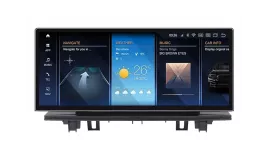
| Operation system: | Android 13 |
| Display: | 12.3 inches IPS (Ultra-slim design) |
| Resolution: | Full HD Ultra-wide (1920x720 px) |
| Processor: | 2.8 GHz Octa-Core (Snapdragon 662/685) |
| RAM + SSD: | 4+64 / 8+128 / 8+256 Gb |
| Car link: | Wireless Apple CarPlay & Android Auto |
| Free gift: | DVR with ADAS / TPMS / HD Rear Camera |
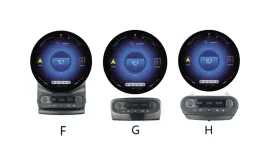
| Operation system: | Android 13 |
| Display: | 11.8 inches IPS |
| Resolution: | Full HD (1536x1536 px) |
| Processor: | 2.0 GHz Octa-Core (Qualcomm QCM6125) |
| RAM + SSD: | 4+64 / 8+128 Gb |
| Car link: | Wireless Apple CarPlay & Android Auto |
| Free gift: | DVR with ADAS / TPMS / HD Rear Camera |
Does Installing an Android Head Unit Void Your Car Warranty? Full...
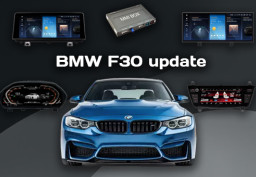
Android Head Unit for BMW 3 Series F30/F31, M3 F80 (2011–2021):...
Android Head Unit Processors Guide 2026: Snapdragon vs. UIS Full...
Best Android Head Unit for Mercedes: The Ultimate Multimedia &...

The Evolution of Comfort: How to Choose a Premium Android System...

Best Android Head Units 2026: Top Car Stereo Upgrade Guide
 EN
EN DE
DE
 ES
ES
 FR
FR
 IT
IT
 NL
NL
 PL
PL
 PT
PT
 RU
RU