



Android Head Unit Processors Guide 2026: Snapdragon vs. UIS Full Comparison
A comprehensive expert comparison of Qualcomm Snapdragon and Unisoc UIS processors to help you choose the perfect Android head unit for your car, budget, and needs in 2026.
The Ultimate Android Head Unit Processor Guide 2026: Snapdragon vs. UIS Full Comparison (Architectures, Use Cases & Budgets)
When choosing a modern Android head unit, buyers often make a critical mistake: they look exclusively at the RAM volume (e.g., 2/4/8 GB or 12 GB), completely ignoring the "heart" of the device - its central processor (CPU). However, the navigation loading speed, wireless Wireless CarPlay / Android Auto stability, user interface smoothness during split-screen operation, and audio processing quality directly depend on the CPU architecture and process node.
On specialized automotive forums (such as Reddit and XDA Developers), there are ongoing debates about which platform is more efficient: the American Qualcomm Snapdragon or the specialized multimedia UIS (Unisoc) from the FYT ecosystem. In 2026, there are no definitively "bad" processors among the current lineups. Each chip was engineered for a specific technical task, device form factor (Tesla Style, wide screens, OEM design), and buyer budget. In this ultimate expert review, we will break down the entire hierarchy of mobile platforms for car audio.
1. Architecture and Microarchitecture: Why Clock Speed Isn't Everything
Before diving into specific models, it is essential to understand how modern processors for head units are designed. All of them are multi-core (usually 8 cores) but use fundamentally different combinations of performance cores (Cortex-A75 / Cortex-A73) and energy-efficient cores (Cortex-A55 / Cortex-A53). Pure clock speed in GHz matters only when combined with the architecture and process node (nanometers, nm). The smaller the process node, the less heat the processor generates inside the tight dashboard environment, resulting in higher performance under load without thermal throttling.
| CPU Family | Process Node (nm) | Core Combination | Graphics Processing Unit (GPU) |
|---|---|---|---|
| Qualcomm Snapdragon 685 | 6 nm | 4x Cortex-A73 (2.8 GHz) + 4x Cortex-A53 (1.9 GHz) | Adreno 610 |
| Unisoc UIS7870CS | 6 nm | 8x Cortex-A55 (2.7 GHz) - custom architecture | Mali-G57 MC2 |
| Qualcomm Snapdragon 662 / 665 | 11 nm | 4x Cortex-A73 (2.0 GHz) + 4x Cortex-A53 (1.8 GHz) | Adreno 610 |
| Unisoc UIS7862 / UIS7862S | 12 nm | 2x Cortex-A75 (2.0 GHz) + 6x Cortex-A55 (2.0 GHz) | Mali-G52 |
| Unisoc UIS7672S / 8581A | 12 / 28 nm | 8x Cortex-A55 (2.0 GHz) / 8x Cortex-A55 (1.6 GHz) | PowerVR / Mali |
2. Detailed Breakdown of Processor Lineups by Segment
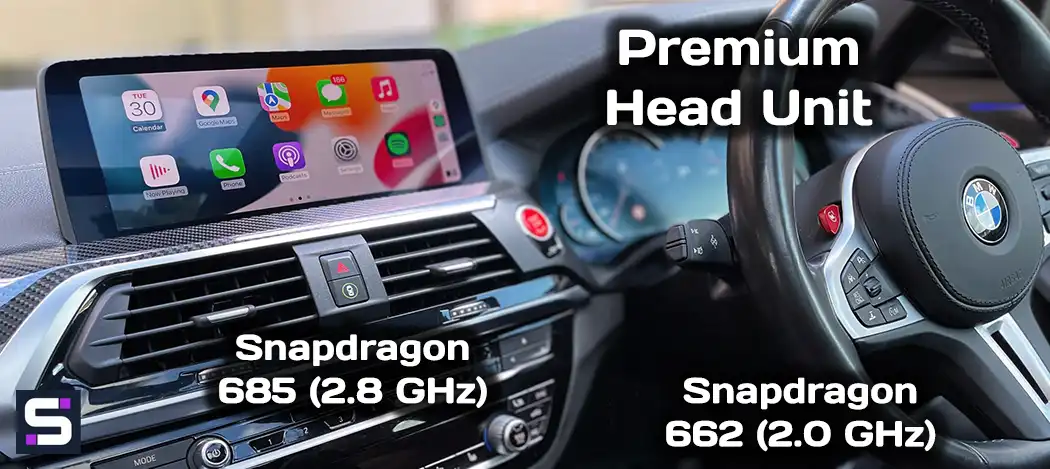
Premium Segment: Uncompromised Stability and Speed
The premium class is targeted at car owners who want a flagship smartphone-level interface, maximum wireless performance, and excellent energy efficiency.
- Qualcomm Snapdragon 685 (2.8 GHz, 8 Cores): The absolute technological leader. Thanks to its advanced 6 nm process node and high clock speed of performance cores, this chip practically does not heat up. Even during simultaneous operation of heavy 3D navigation, music streaming via Apple CarPlay, and background dashcam recording, the interface maintains perfect smoothness (60 FPS).
- Qualcomm Snapdragon 662 (2.0 GHz, 8 Cores): A time-tested and user-approved "gold standard" of the premium class. It features excellent energy efficiency and benchmark stability of Bluetooth and GPS/GLONASS modules. Switching between applications occurs without the slightest delay.
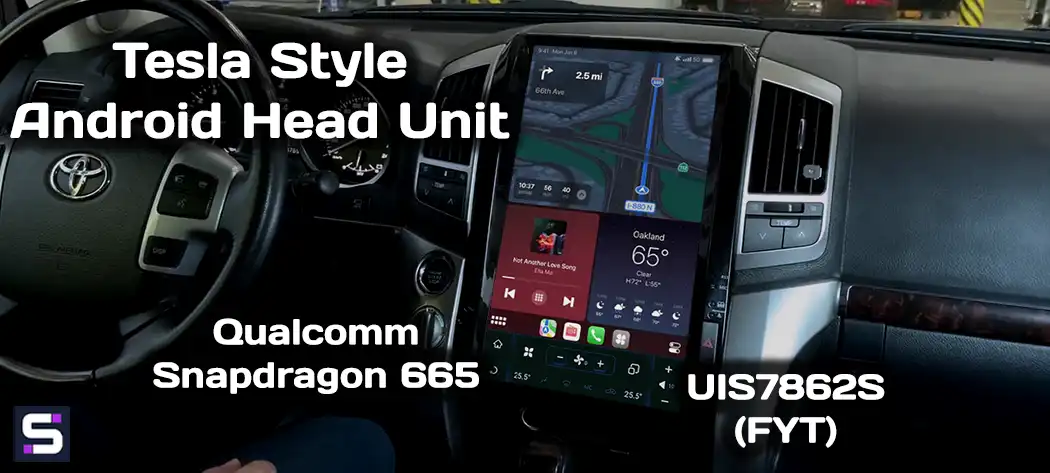
"Tesla Style" Form Factor: Maximum Multitasking
Head units with huge vertical screens require high graphics performance from the processor. The main challenge here is working in Split Screen mode, where two heavy processes are active on the display simultaneously.
- Snapdragon 665 (8 Cores): The American architecture from Qualcomm provides powerful hardware graphics acceleration via the Adreno GPU. This is critical for rendering large vertical interfaces without frame rate drops.
- UIS7862S FYT (8 Cores): A specialized multimedia platform deeply customized by FYT engineers. The main advantage is near-instant awakening from sleep mode (Fast Boot in 1-2 seconds) and flawless integration with the vehicle's climate control blocks via the factory CAN bus.
Classic Frame Devices: Balance of Multimedia and Display
For universal 9- and 10-inch devices installed via custom fascia frame kits, support for modern matrix types (QLED/OLED) and ultra-high resolution is critical.
- UIS7870CS (2.7 GHz, 8 Cores): The newest flagship in the Unisoc lineup, built on a 6 nm process. Its key feature is native support for screens with ultra-high 2K resolution (2000x1200 px). The chip possesses colossal throughput for real-time stitching and processing of video streams from 360° surround-view camera systems.
- UIS7672S (2.0 GHz, 8 Cores): A modern, energy-efficient processor for standard resolution devices (Full HD / HD). It offers excellent speed for everyday tasks (Google Maps, Spotify, YouTube) without overpaying for excess power.
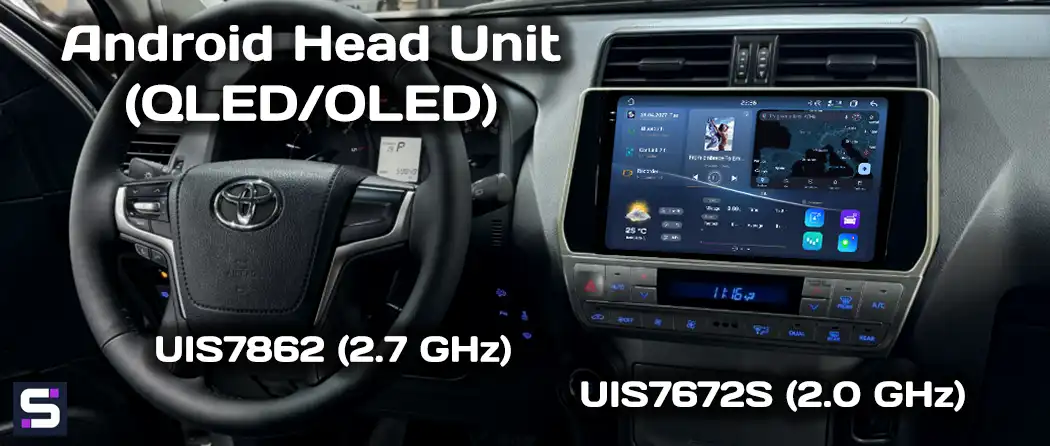
OEM Style (Factory Design): Authenticity and Reliability
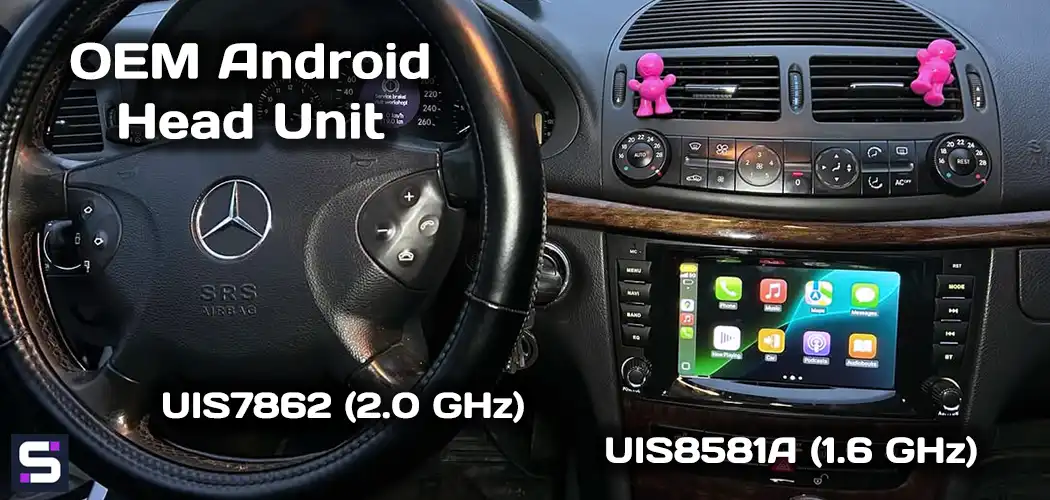
OEM-style head units completely replicate the design of the original factory radio. Here, longevity, low heat dissipation inside the closed housing, and maximum compatibility with factory electronics are paramount.
- UIS7862 (2.0 GHz, 8 Cores): The legendary processor that revolutionized the Android head unit market (and remains the most discussed chip on XDA Developers). It features magnificent stability and a built-in hardware audio DSP for fine-tuning the soundstage.
- 8581A (1.6 GHz, 8 Cores): The optimal basic 8-core processor. It is perfect for those who want to replace an old button radio with a modern touchscreen device featuring navigation and a rearview camera while staying within a reasonable budget.
3. Summary Processor Selection Matrix: Comparison Table
To simplify the selection process, we have systematized all processors into a unified ecosystem categorized by tasks and architecture:
| Processor (CPU) | Frequency / Cores | Segment / Form Factor | Main Advantage (Based on tests and forums) |
|---|---|---|---|
| Snapdragon 685 | 2.8 GHz / 8 Cores | Ultra-Premium Segment | Maximum speed in 2026, stability of Wireless CarPlay |
| UIS7870CS | 2.7 GHz / 8 Cores | 2K Premium (Frame Units) | Native support for 2K screens, instant 360° system processing |
| Snapdragon 665 | 2.0 GHz / 8 Cores | Tesla Style | Smooth rendering of large vertical interfaces |
| UIS7862S (FYT) | 2.0 GHz / 8 Cores | Tesla Style / Universal | Fast start (Fast Boot), perfect integration with the vehicle's CAN bus |
| Snapdragon 662 | 2.0 GHz / 8 Cores | Premium OEM / Wide Screens | Benchmark stability of GPS tracking and connectivity, no heating |
| UIS7672S | 2.0 GHz / 8 Cores | Medium Segment (Frame Units) | Best balance of price and performance for HD/Full HD systems |
| UIS7862 | 2.0 GHz / 8 Cores | OEM Style / Classic | Time-proven reliability, excellent operation with built-in DSP |
| 8581A | 1.6 GHz / 8 Cores | Standard OEM / Budget | Affordable price for full-fledged 8-core multitasking |
4. Pitfalls and Myths from Forums (Reddit / XDA)
Analyzing thousands of discussion threads on specialized forums reveals three main concerns users have when choosing a chip:
- Throttling and Heating: Older chips (e.g., on a 28 nm process) drop their frequencies under load in hot weather, causing navigation to stutter. Modern Snapdragon 685 and UIS7870CS processors, thanks to their 6 nm process node, are practically free of this issue - their operating temperature is 15-20 degrees lower than their predecessors.
- Audio Quality (DSP): Many believe that the main CPU directly affects sound quality. This is not entirely accurate. Sound processing is handled by a dedicated chip - a DSP (Digital Signal Processor), such as Rohm 32107 or Asahi Kasei. The UIS processor lineup (7862, 7862S, 7870CS) from the FYT ecosystem features excellent integrated hardware circuitry to support top-tier DSPs out of the box. Snapdragon platforms require a more complex board layout but deliver premium Hi-Fi sound at the highest level.
- GPS and Modem Performance: Qualcomm Snapdragon chips are traditionally considered the gold standard for maintaining stable GPS/GLONASS satellite tracking in dense urban areas (among high-rise buildings) due to advanced proprietary communication algorithms.
5. Compatibility Matrix: Which Processor Suits Which Car?
To simplify head unit selection, we compiled a compatibility table matching processors, screen types, and car brands:
| Platform (CPU) | Recommended Screen Type | Priority Car Brands | Target Purpose |
|---|---|---|---|
| Snapdragon 685 / 662 | Wide Ultra-Premium (Wide Screens 10.25" / 12.3") | BMW, Mercedes-Benz, Audi, Porsche | Maximum speed, wireless CarPlay, integration with complex factory systems (NTG, MMI, iDrive) |
| UIS7870CS / UIS7672S | 2K Ultra-Premium (High-Resolution Displays 2000x1200) | Toyota Land Cruiser, Nissan, Mitsubishi, Honda | Perfect picture quality, 2K navigation, active use of 360-degree surround-view systems |
| Snapdragon 665 / UIS7862S | Tesla Style (Vertical Screens 11" - 13") | Ford, Lexus, Infiniti, Toyota, Chevrolet | Heavy multitasking interface, climate control management displayed directly on the screen |
| UIS7862S | Standard OEM / Frame Units (9" - 10" HD/FHD) | Volkswagen, Skoda, Hyundai, Kia, Renault | Optimal balance of price and quality for daily commuting, navigation, music, YouTube |
| 8581A | Budget OEM (Basic Touchscreens) | Older car models (up to 2012-2015 production years) | Replacing an old button factory radio with an Android system while keeping a modest budget |
6. Final Buyer's Guide: How to Make the Right Choice?
When choosing a head unit, look past marketing slogans and answer three questions honestly:
- What is your car's design? If you own a German premium vehicle (BMW/Mercedes) with a wide original dashboard slot, choose a Snapdragon configuration. If you are installing an upgrade via a fascia frame into a Japanese or Korean vehicle and want a highly vibrant picture, look for the UIS7870CS chip with 2K support.
- How do you plan to use the device? If you require flawless, uninterrupted wireless CarPlay operation, frequent Bluetooth calling, and perfect GPS navigation tracking, Snapdragon platforms deliver maximum comfort. If near-instant boot times upon turning the ignition key and robust integration with the CAN bus are your priority, UIS (FYT) is the ideal solution.
- What is your budget? There is no need to overpay for a flagship Snapdragon 685 if you simply need a reliable device for music, radio, and occasional navigation in traffic. The UIS7672S or legendary UIS7862 chips will handle standard Android applications perfectly while saving you money.
You can always find the ideal head unit fully compatible with your specific car make, model, production year, and trim level, as well as receive professional consultation on hardware platform selection from technical experts on the website of certified car multimedia suppliers: Smarty-trend.com.
Multimedia Upgrade for Audi Q5 (8R, 2nd Gen) and Q7 (4L, 4M):...
Best Android Head Unit for Mercedes: The Ultimate Multimedia &...
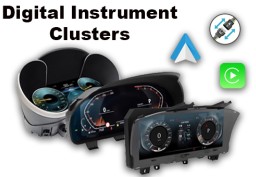
Digital Instrument Clusters by SMARTY Trend: The Ultimate Virtual...

Best Android Head Unit for BMW: Upgrade Your E60, F10, or G30 to a...

Smarty Trend: Best Android Head Unit with CarPlay & Android Auto
 EN
EN DE
DE
 ES
ES
 FR
FR
 IT
IT
 NL
NL
 PL
PL
 PT
PT
 RU
RU
 WhatsApp